


The Core of the Fourth Industrial Revolution: The Global Industrial AI Industry
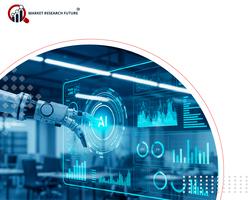
The global Industrial AI industry represents the powerful convergence of advanced data analytics, machine learning, and heavy industry, acting as the central nervous system for the ongoing fourth industrial revolution, or "Industrie 4.0." This specialized sector is fundamentally distinct from consumer AI; it is not concerned with advertising or entertainment but with the complex, high-stakes physical processes that power the global economy. Industrial AI focuses on deploying intelligent systems within manufacturing plants, energy grids, supply chains, and transportation networks to achieve step-change improvements in efficiency, productivity, safety, and resilience. It involves embedding intelligence directly into operational technology (OT), leveraging data from sensors, machines, and production systems to create self-optimizing, self-diagnosing, and highly automated environments. This industry is transforming legacy industrial assets into smart, connected systems, unlocking unprecedented levels of performance and creating a new paradigm for how physical goods are produced, distributed, and maintained in the 21st century. It is the critical technology layer that turns the vision of the "smart factory" into a tangible, value-generating reality.
The key players and stakeholders in the Industrial AI ecosystem are a diverse group, forming a value chain that extends from the silicon chip to the factory floor. At the top are the industrial behemoths—companies like Siemens, General Electric (GE), Bosch, and Honeywell—that possess deep domain expertise in manufacturing and operational technology. They are leveraging their vast installed base and knowledge to build proprietary Industrial Internet of Things (IIoT) platforms and AI applications tailored for their equipment. Alongside them are the enterprise software giants, such as SAP and Oracle, which are embedding AI capabilities into their ubiquitous manufacturing execution systems (MES) and enterprise resource planning (ERP) software. The global cloud providers—Amazon Web Services (AWS), Microsoft Azure, and Google Cloud—form another critical pillar, providing the scalable computing infrastructure and pre-built AI/ML services that enable both industrial giants and startups to develop and deploy their solutions. Finally, a vibrant ecosystem of specialized AI startups, such as C3.ai and Uptake, are bringing agile, cutting-edge solutions to specific industrial problems, often with a focus on specific verticals like oil and gas or renewable energy.
The primary applications of Industrial AI are focused on solving some of the most persistent and costly challenges in heavy industry. Predictive maintenance is arguably the "killer app" of the sector. By analyzing data from sensors on machinery, AI algorithms can predict equipment failures before they happen, allowing companies to schedule maintenance proactively, which dramatically reduces unplanned downtime and extends the life of expensive assets. Another major application is computer vision for quality control. AI-powered cameras on a production line can inspect products with superhuman speed and accuracy, detecting microscopic defects or assembly errors that would be missed by the human eye, leading to significant improvements in product quality and a reduction in waste. In logistics and supply chain management, Industrial AI is used to optimize routing, forecast demand with greater precision, and manage automated warehouse robotics, creating more resilient and efficient supply networks. These practical, high-ROI applications are what drive the adoption of AI in these pragmatic, bottom-line-focused industries.
The ultimate impact of the Industrial AI industry is the creation of a closed-loop system of continuous improvement for physical operations. In a traditional factory, data is collected, but it is often analyzed retrospectively to understand what went wrong. In an AI-powered factory, data is analyzed in real-time to predict what will happen and to automatically adjust processes to optimize outcomes. This creates a dynamic, learning environment where machines and systems become progressively more efficient and intelligent over time. This shift from reactive analysis to proactive optimization is the core of the Industrie 4.0 vision. However, this transformation is not without its challenges. It requires significant investment in new technology, the reskilling of the workforce to collaborate with intelligent systems, and, most critically, the implementation of robust cybersecurity measures to protect these highly connected and newly vulnerable industrial control systems from sophisticated cyber threats, a risk that grows in lockstep with the level of automation and connectivity.
Explore More Like This in Our Reports:

 English
 Arabic
 French
 Spanish
 Portuguese
 Deutsch
 Turkish
 Dutch
Dutch
 Italiano
 Russian
 Portuguese (Brazil)
 Greek
Greek