


Competitive Landscape and Major Players Dominating Global 5G Infrastructure Market Share Today
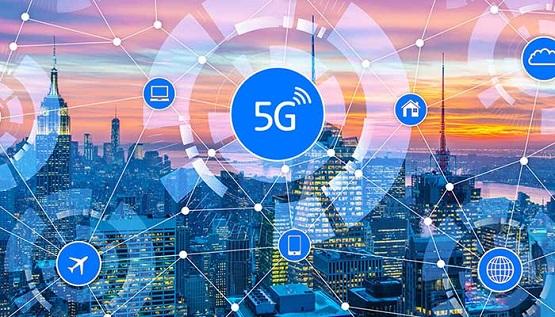
When examining the current 5G Infrastructure Market Share, it is clear that the market is a high-stakes arena dominated by a few massive players, though the boundaries are beginning to blur due to the rise of Open RAN and software-driven networking. Historically, the market was split between a handful of hardware-heavy vendors who provided end-to-end proprietary solutions. Today, while companies like Huawei, Ericsson, and Nokia still control the lion's share of the global RAN and Core market, their strategies have diverged significantly. Huawei maintains a massive lead in terms of total deployed base stations, particularly in the Asia-Pacific region and parts of Africa, where its cost-effectiveness and integrated solutions remain highly attractive. However, in Western markets, Ericsson and Nokia have capitalized on security concerns and government mandates to secure long-term contracts for national 5G rollouts. These companies are now focusing on high-margin software services and advanced MIMO technology to maintain their market leadership and differentiate themselves from lower-cost competitors.
Samsung Electronics has emerged as a major disruptor, successfully translating its early leadership in the South Korean 5G market into significant global gains. By focusing heavily on virtualized RAN (vRAN) and being an early proponent of open standards, Samsung has positioned itself as the go-to alternative for operators looking to diversify their vendor base. Their landmark deals with major carriers in the United States and Japan have proven that they can compete at the highest level of scale and reliability. Beyond the traditional big four, companies like ZTE also hold a substantial share, primarily in China, which remains the world’s largest 5G market by a significant margin. The competitive landscape is also seeing the entry of non-traditional players like NEC and Fujitsu, who are leveraging their expertise in Open RAN to win contracts in the UK and other European nations. This fragmentation of the market share is a sign of a healthy, maturing industry where innovation is being rewarded.
The share of the market held by cloud providers and software companies is an increasingly important metric to watch. Hyperscalers like Amazon Web Services (AWS), Microsoft Azure, and Google Cloud are no longer just partners; they are becoming integral parts of the 5G infrastructure through their edge computing and cloud-native core offerings. Many telcos are now running their 5G core networks on public cloud infrastructure, shifting the value from traditional hardware vendors to cloud giants. This "telco-cloud" convergence is creating a new competitive dynamic where the control over the software layer is just as important as the control over the radio waves. This trend is also allowing smaller software vendors to gain a foothold in the market by providing specialized orchestration and automation tools. As the network becomes more software-defined, the traditional way of measuring market share by "boxes sold" is becoming obsolete, replaced by more complex metrics like "software-defined connections" and "cloud-native throughput."
Geographically, the distribution of market share remains heavily skewed toward the Asia-Pacific region, which led the world in early 5G adoption. China’s massive domestic investment alone accounts for a huge portion of global infrastructure spending. However, the North American and European markets are catching up as they transition from initial 5G coverage to more advanced, standalone deployments. In these regions, the battle for market share is often won on the basis of security certifications, energy efficiency, and the ability to support legacy 4G systems during the transition. The burgeoning markets in India and Southeast Asia represent the next great frontier for market share expansion, with global vendors and local players competing fiercely for a share of these rapidly growing digital economies. The future of market share will likely be defined by "co-opetition," where companies compete in some areas while collaborating on open standards and interoperability to ensure the overall health of the global 5G ecosystem.
Explore More Like This in Our Reports:
Content Authoring Tools Market

 English
 Arabic
 French
 Spanish
 Portuguese
 Deutsch
 Turkish
 Dutch
Dutch
 Italiano
 Russian
 Romaian
 Greek
Greek