


The Competitive Landscape for Immersive Tech in Manufacturing Share
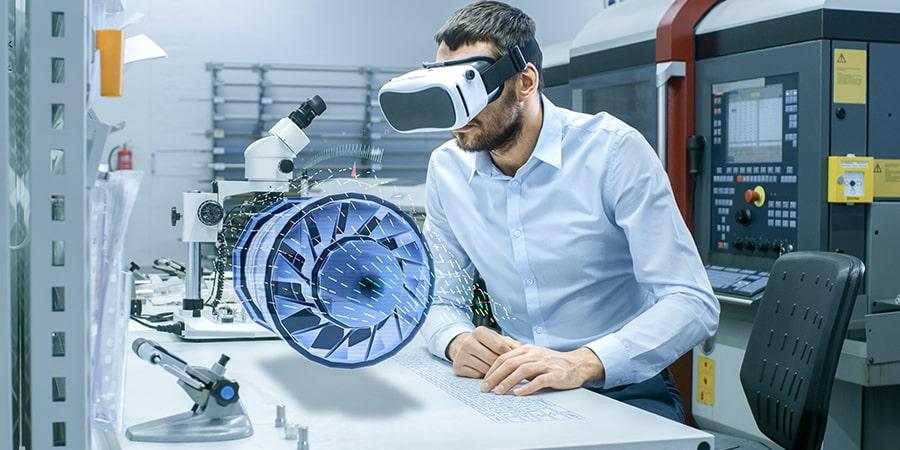
As the use of immersive technology in the industrial sector accelerates towards a projected $89.78 billion market by 2035, the strategic battle for Augmented Reality & Virtual Reality In Manufacturing Market Share is intensifying among a diverse group of technology providers. This market's explosive growth, driven by a formidable 28.62% CAGR, has created a highly competitive and lucrative arena. The key players include enterprise hardware manufacturers, industrial software giants, cloud platform providers, and agile startups, all vying for a dominant position. Gaining market share in this space is not just about selling a single product; it is about becoming an integral part of a manufacturer's digital transformation strategy, providing a platform that can scale across multiple use cases from the design lab to the factory floor, and securing long-term, high-value partnerships.
In the hardware segment, market share is currently led by a few key players who have focused on the specific needs of the enterprise. Microsoft holds a commanding position in the high-end mixed reality space with its HoloLens 2, which is favored for its advanced spatial mapping and hands-free interaction capabilities. In the assisted-reality sub-segment, companies like RealWear and Vuzix have captured significant share with their ruggedized, voice-controlled monocular displays designed for frontline workers in harsh environments. On the VR side, companies like HTC (with its Vive series) and Varjo (known for its human-eye resolution displays) are strong competitors in the market for high-fidelity training and simulation. These hardware providers are competing on factors like durability, ergonomic design, processing power, and the strength of their respective partner ecosystems.
The software and platform layer is arguably even more competitive, featuring a mix of established industrial software leaders and AR/VR specialists. Industrial giants like PTC (with its Vuforia platform) and Siemens have a major advantage as they can integrate AR/VR capabilities directly into their existing, widely adopted Product Lifecycle Management (PLM) and industrial software suites. This creates a sticky ecosystem for their existing customer base. At the same time, specialized remote assistance platforms like TeamViewer Frontline are gaining significant market share with their user-friendly, cross-platform solutions. Furthermore, large cloud providers like Microsoft Azure and AWS are also entering the fray, offering the scalable backend infrastructure and AI services needed to power enterprise-scale immersive applications, competing to be the foundational cloud for the industrial metaverse.
Geographically, North America and Europe currently dominate the market share, driven by strong adoption in their advanced automotive, aerospace, and industrial machinery sectors. These regions have been early adopters and have a high concentration of both technology vendors and large manufacturing clients. However, the Asia-Pacific region is the fastest-growing market and is expected to claim a much larger share in the coming years, fueled by its massive manufacturing base and strong government initiatives promoting Industry 4.0. The market share is also fragmented by use case, with certain companies leading in training solutions while others excel in maintenance applications. This dynamic and evolving landscape ensures that the race for dominance will remain a key storyline as the industry expands.
Explore More Like This in Our Regional Reports:
France Wireless Telecommunication Service Market

 English
 Arabic
 French
 Spanish
 Portuguese
 Deutsch
 Turkish
 Dutch
Dutch
 Russian
 Romaian
 Portuguese (Brazil)
 Greek
Greek